Tuesday, October 8, 2013

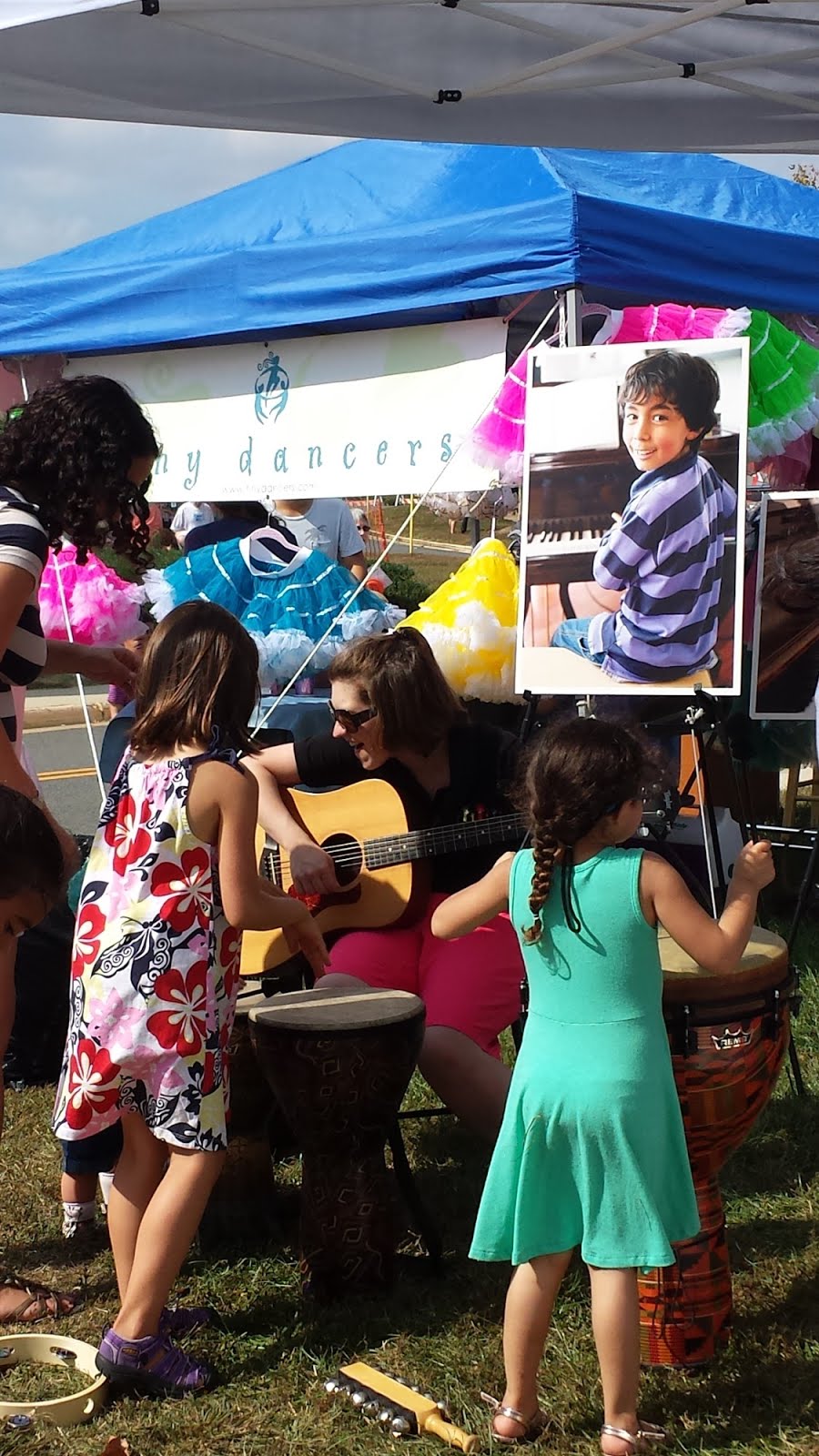
Fall for Fairfax KidFest


Josh Schrader, MT-BC


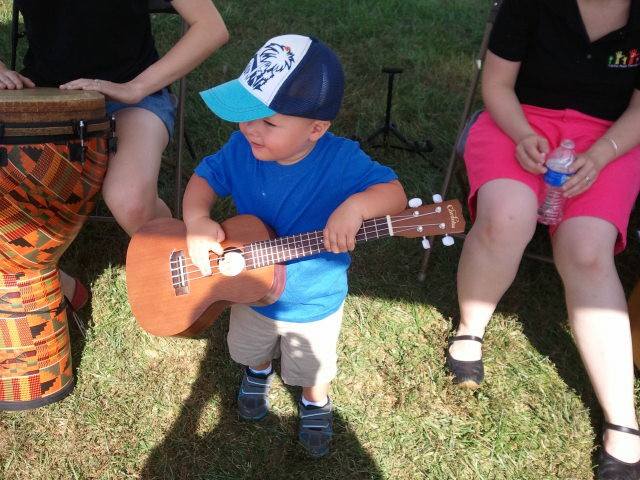
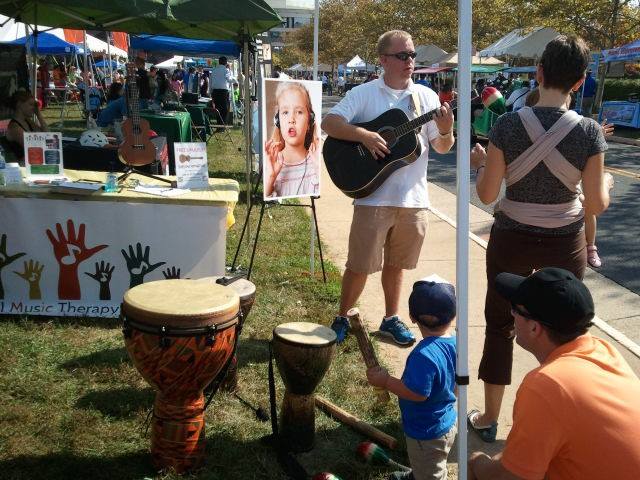
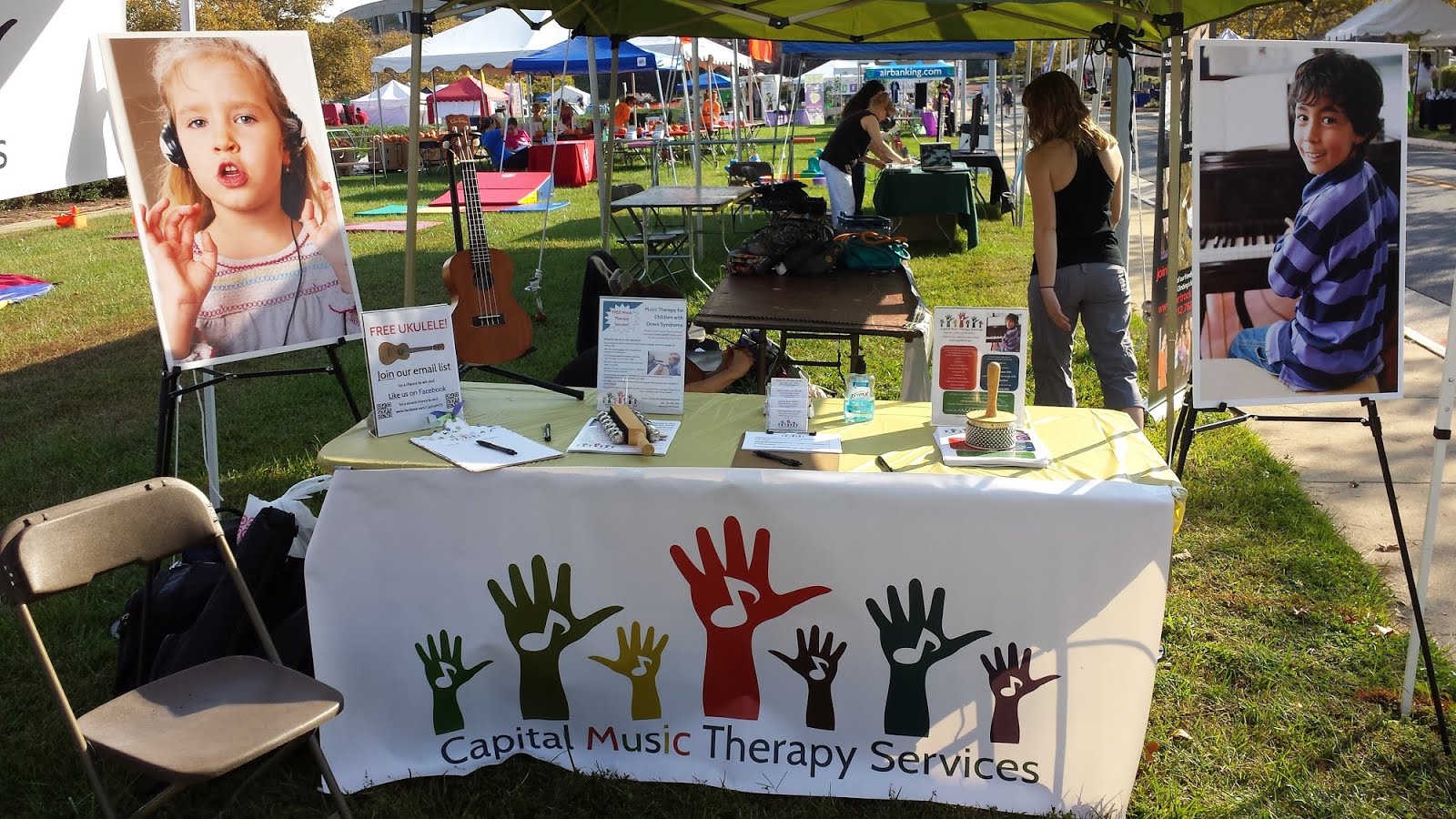
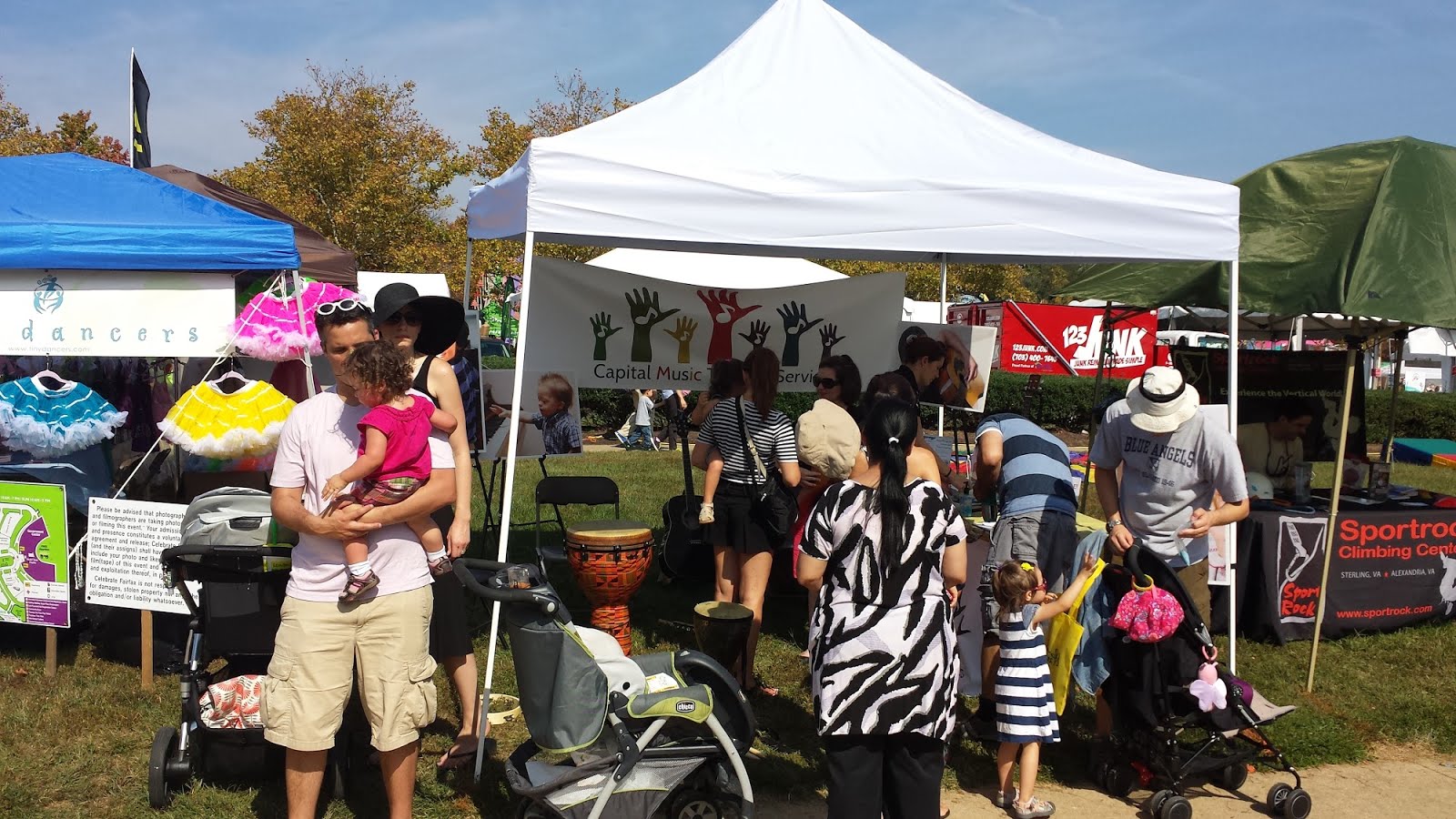
Last weekend our company had the great pleasure of exhibiting as a vendor for Fall for Fairfax KidsFest at the Fairfax County Government Center. This was our first large-scale two day event.  We where were exposed to over 20,000 people, got 109 of them to sign up for our email list, and 8 new customers.  We had a great time getting to know lots of new people and reconnecting with a lot of old friends.  We played instruments with lots of kids, talked about our services, and handed out tons of information to people! We also got to inform people about the groups we are offering starting in January.  All in all, it was a highly successful event!


Using Music to Reach Your Full Potential

Proudly Serving Northern Virginia, Washington D.C., and Maryland


Wednesday, October 2, 2013

3 Simple Ways Anyone Can Use Music At Home with Their Child


Marie-Louise Lyon, MT-BC


It seems as though every day a study is being published about what you need to do to make your child grow up smarter, funnier, stronger, healthier. I don’t know about anyone else, but some days it is a victory that everyone got out of bed, out the door, and to their destination on time! Although there are numerous studies documenting the benefits of using music with children, as parents it does not always seem to be practical and usable advice.


One of the most popular pieces of advice out there is to enhance your child’s home environment by using music in as many ways as possible. That is great advice if you feel confident with music, but many of us adults do not believe ourselves to be musical people. So how can a person who feels they are not musical use music at home? Below are three simple ways that anyone can use music at home with their child.


1. Make up songs about your day. The best and easiest way to incorporate music into your day is to use your voice! It’s cheap and it’s easy. Your child will not care whether you have a great voice or a mediocre voice; they will enjoy making music with you!  Remember, your child has been listening to and enjoying the sound of your voice far before they entered this world.  If you are feeling confident, compose your own songs by using a common method used in music therapy called the piggyback method. Take any familiar song and change the words to fit your daily routine. Below is a little girl using Row, Row, Row Your Boat to sing about brushing her teeth.


If you are not comfortable making up your own words, the Sing A New Song has some great piggyback songs that you can use. You can also google search almost any routine and find a variety of resources! Pick something that you will enjoy singing!


Remember to take it easy! Don’t try to make up a song for every routine on your first day. Enjoy learning each song one at a time. Focus on that song until you and your child gets comfortable and it becomes part of the routine before adding more songs. Adding one moment of music making together a day will have a profound impact on your child’s environment!


2. Share your favorite music. I’ve often heard a common myth that the only kind of music that makes children smart is classical music, mostly Mozart. However, the only thing your child will learn if you hate classical music is to hate classical music! Children learn by watching and modeling the behavior of others. Therefore, it is important to share your love of music with them, no matter what kind of music it may be. My love of music developed during fun times dancing around the kitchen with my dad, rock and roll music blaring! Although those moments just seemed like playtime, they were defining moments that developed my love for music and enriched my learning.


3. Attend concerts together.  Another myth about children is that they should not attend concerts because they are too young, would not enjoy them, and would be disruptive. I love going to concerts! Live music, the atmosphere, and interacting with other people who share my passion! Don’t those sound like great advantages to take your children? During the summer months, there are a variety of (free!) outdoor concerts that are the perfect venue to take your kids to. However, just because the summer has come to an end does not mean that the music has to as well. Many area symphony orchestras offer special incentives to children to attend concerts. The Kennedy Center has developed a series of sensory friendly concerts that have better lighting and sound levels for children. If you are willing to travel a little bit further, The Musical Autist also puts on sensory friendly concerts in the Baltimore-Annapolis area. Attending a concert together is not only fun, but helps to encourage a love for music and learning.


Using Music to Reach Your Full Potential

Proudly Serving Northern Virginia, Washington D.C., and Maryland


Saturday, September 28, 2013

DSANV 9th Annual Buddy Walk

DSANV 9th Annual Buddy Walk
Marie-Louise Lyon, MT-BC


Today our company had the great pleasure of attending the Down Syndrome Association of Northern Virginia’s 9th Annual Buddy Walk on the campus of George Mason University. This was our first event of the fall season to connect with the community, and connect we did! We had a great time getting to know some other valuable resources such as Iriya Dance Movement Therapy, Achieve Beyond, Chesapeake Children’s Therapy Center, Washington Speech, Continuum, and Paxton Campus.  We also got to meet hundreds of awesome families and individuals who participated in the walk. We played instruments, talked about our services, and handed out tons of information to people! Be sure to come check out our booth next week, Octoboer 5th & 6th at Fall for Fairfax KidsFest at the Fairfax County Government Center. We are looking forward to seeing you!


Using Music to Reach Your Full Potential

Proudly Serving Northern Virginia, Washington D.C., and Maryland


Wednesday, September 18, 2013

What Really is Music Therapy? No, Really...What Exactly Does it Mean?

This is by far the most frequent question we get asked!  So, if you are wondering this, you’re not alone.  A series of blog posts with this title will be posted from time to time that will shed light on an answer to the question, “what really is music therapy.”  


Recently, music therapy has had quite the spotlight in the media. We’ve all heard the reports, read the articles, and talked about the role music has played in Gabby Gifford’s recovery. We’ve seen the news articles talking about how music can help babies in the NICU, grieving children, older adults with Alzhiemers, and almost any population in between. But what exactly is music therapy?

As a music therapy student, the clinical definition of music therapy was drilled into our heads. We were taught that is was the only acceptable answer to “What is music therapy?”. But it wasn’t until we started practicing as a professional music therapist that we truly understood the meaning behind the big words and complicated sentences.

So what, really, is music therapy?

Good question!  One way to answer this question is not describing "what" it is, rather describing "how" it is.  

Music therapists receive unique training to manipulate and use the elements of music to target specific goals. They use music to draw upon a person’s strengths to target their weaknesses. Although it may look like a music therapist is just singing, performing, or playing instruments with a client, they are actually creating a unique, one of a kind experience specifically designed to target the client’s needs. Here is the amazing part, the music intervention is facilitating the heavy "therapeutic" lifting so to speak for the client. Because of this, music creates unique responses in individuals that may not be seen through any other therapeutic medium, making it a dynamic form of therapy. It takes a lot of the work out of the therapeutic process, making it more like play. I mean really, who wouldn’t want hard work to be more like play for 30 minutes a day?!?!

How does music play a role in making your everyday life easier?

Monday, July 15, 2013

Music is a Resource that Tones the Brain for Auditory Fitness

Music Training for the Development of Auditory Skills by Nina Kraus and Bharath Chandrasekaran is an article that outlines the benefits of engagement in music on the auditory system of the brain.


"Music is a resource that tones the brain for auditory fitness,"  the authors state.  There are numerous research articles concluding music therapy is an effective treatment medium for language acquisition as well as developing communication skills. Kraus and Chandrasekaran's article partly sheds light on why that is. This has important ramifications for the clinical treatment of children on the Autism spectrum or with speech delays. Simply because engagement in music training over time strengthens and enhances the brain's ability to perform the skills needed for communication.

Kraus and Chandrasekaran state, "Children who are musically trained show stronger neural activation to pitch patterns of their native language, have a better vocabulary, and a greater reading ability compared with children who did not receive music training. This suggests that musicians have an advantage in everyday speech and language tasks. The link between reading ability and auditory skills (for example, in terms of processing time-varying signals, speed of processing and statistical learning) is well-acknowledged."

Active engagement in music therapy interventions by a board-certified professional over time enhances your brain's auditory processing ability. This leads to improved language acquisition and development of communication skills.  Visit www.capitalmts.com to find out how you can get your child with Autism or speech delays involved with individual or group music therapy services.


Kraus, N. & B. Chandrasekaran. 2010. Music training for the development of auditory skills. Nat. Rev. Neurosci. 11: 599–605.


Using Music to Reach Your Child's Full Potential

Proudly Serving Northern Virginia, Washington D.C., and Maryland


Wednesday, June 19, 2013

Singing Live Lullabies Help Premature Infants Thrive

"Sing Live to Thrive"

ABC News

ABC News recently reported that scientific studies have proven that music  helps premature infants thrive.

A study conducted by the chief of newborn medicine at NewYork-Presbyterian Komansky Center for Children's Health, found that gentle music slows down the heart rate of preemies and helps them feed and sleep better too. This helps with weight gain and speeds their recovery.

Another study concluded that in order to obtain these results the music must be delivered live as apposed to recorded.


Take 2 Minutes to Watch the News Broadcast for Yourself:


Using Music to Reach Your Child's Full Potential

Proudly Serving Northern Virginia, Washington D.C., and Maryland


Thursday, May 30, 2013

A Key to the 17 Year Cicadas Survival is the Male's Ability to...Sing!


The Brood II 17 Year Cicadas are in full swing in Washington D.C..  Recently, I was amazed when I stepped outside as to how noisy they are.  What I did not realize is that this noise is actually the male cicadas singing a very distinctive mating song and their singing is the sole means of attracting a mate.  After living in the ground for 17 years, the females surface, recognize the song, and are attracted to it.  I find it fascinating that there is yet another example of how music is essential for another living thing's survival even with insects.  Check out this article from Animal Planet to read more.  On a side note, I am very thankful that the survival of my family is not dependent upon my ability to sing!  I could have been in some trouble.


Using Music to Reach Your Child's Full Potential

Proudly Serving Northern Virginia, Washington D.C., and Maryland